Inspire Academy Bhubaneswar, the top-rated B.Ed OTET OSSTET institute in Bhubaneswar, stands out as a premium choice for aspiring educators. Renowned for its exceptional career development programs, it offers unparalleled training and resources for a successful future. Choose Inspire Academy Bhubaneswar for superior guidance and a brighter career in education.
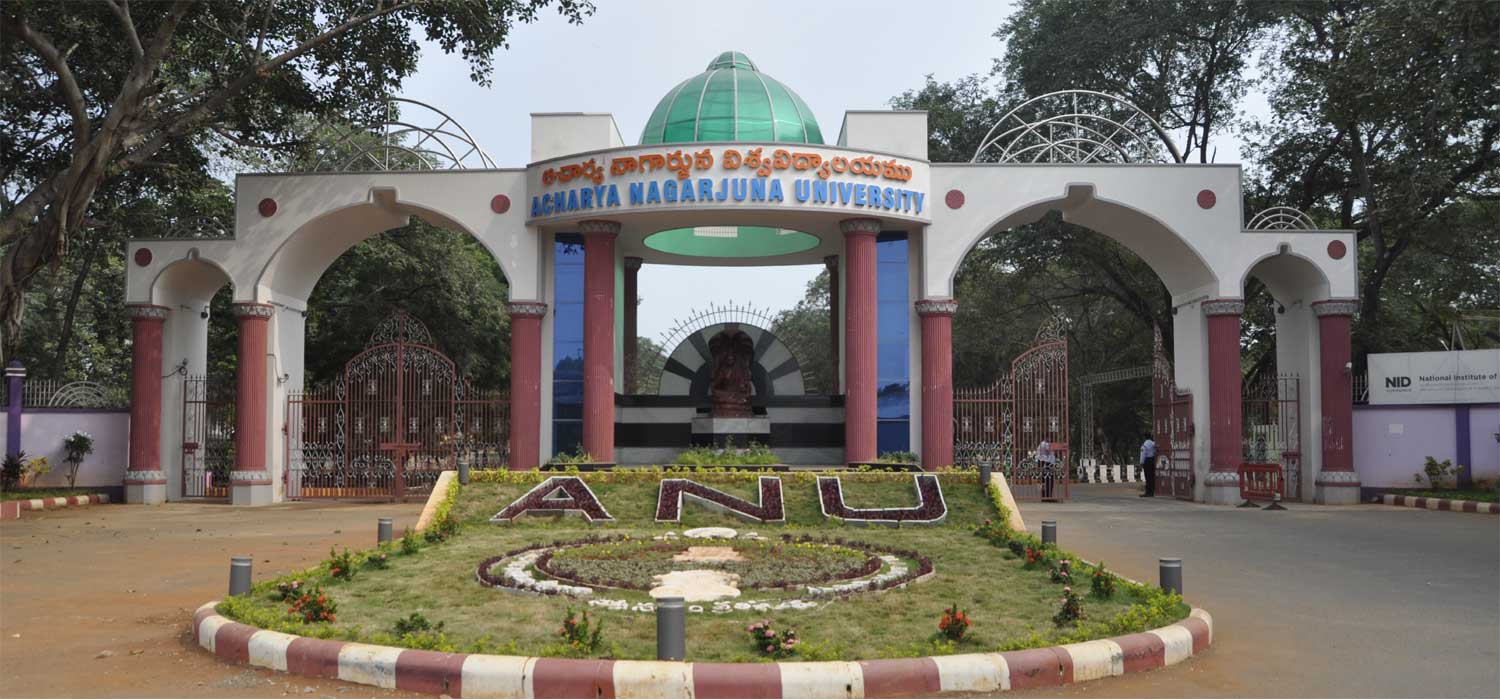
Acharya Nagarjuna University
Acharya Nagarjuna University was founded by Acharya Nagarjuna, a renowned Buddhist preceptor and philosopher. Acharya Nagarjuna University was established in 1976 by Act 43 of the AP State Legislature. It was later renamed Acharya Nagarjuna University through the A.P. Universities (Amendment) Ordinance, 2004. Acharya Nagarjuna University aimed to fulfill the aspirations of the southern coastal districts of Andhra Pradesh for accessible post-graduate education. Initially, Andhra University set up a Post-Graduate Center in Nallapadu, Guntur to cater to the educational needs of the region. Acharya Nagarjuna University officially began its operations in August 1976. Acharya Nagarjuna University has made significant progress in its academic endeavors, expanding its offerings and improving quality. It currently offers post-graduate education in 47 courses on the University campus, as well as affiliated colleges. Acharya Nagarjuna University has established two post-graduate centers in Nuzvid and Ongole to cater to the needs of different regions. Acharya Nagarjuna University has over 450 affiliated colleges in Krishna, Guntur, and Prakasam Districts. It has 39 academic departments, including self-financed courses, and offers a wide range of undergraduate and post-graduate programs. Acharya Nagarjuna University focuses on maintaining high academic standards while expanding access to higher education. Teaching and research are prioritized, with efforts to bridge the gap between knowledge and practical application. The Humanities and Social Sciences Departments study various socio-economic issues and governance problems. The Science Departments engage in research to address societal challenges, such as pollution prevention and alternative energy sources. Acharya Nagarjuna University emphasizes the practical utility of knowledge and actively initiates schemes and projects with a socio-economic focus.
Inspire Academy Bhubaneswar, the top-rated B.Ed OTET OSSTET institute in Bhubaneswar, stands out as a premium choice for aspiring educators. Renowned for its exceptional career development programs, it offers unparalleled training and resources for a successful future. Choose Inspire Academy Bhubaneswar for superior guidance and a brighter career in education.
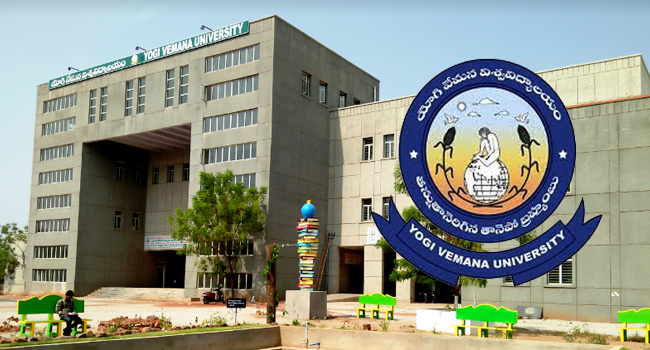
Yogi Vemana University
Named after a renowned philosopher- thinker, poet, sage and yogi, Vemana, Yogi Vemana University, established in the year 2006, by an Act of A.P state legislature is a blessing in disguise for the students and researchers of the backward Rayalseema region in general and Y.S.R district in particular. The erstwhile Sri Venkateswara University Post Graduate Centre was elevated to a University with a humble and noble intention of providing a more conducive environment to impart value-based education and promote quality research and service. The University is committed to nurture and uphold healthy academic standards which contribute to the social, intellectual and moral development. About The University is situated about 15 kms away from the historic Kadapa City on the Kadapa –Pulivendula road amidst serene surroundings and has a sprawling campus of about 652 acres with built-up area 78088.48 sq.mts. With humble beginnings, the University made rapid strides towards overall development and has sufficient infrastructural facilities such as buildings with academic ambience, library, modern science and research laboratories equipped with sophisticated instruments, Super Computer facility, ISRO Geosphere Biosphere Atmospheric Research Facility, Agri-Science Park, spacious hostels, gym, day-care centre, Botanical Garden, RUSA Instrumentation Facility, RUSA SEM Facility, and a vast playground. Besides, a building complex is made available in Gurukulam complex for the purpose of conducting training short term vocational and job oriented courses on a continuous basis. In order to promote technology driven teaching- learning practices the departments have been equipped with digital panel boards. Every department has library with necessary text books and reference books to encourage the students to enrich the understanding of the subjects by additional reading. The University has at present 101 regular staff, 136 Academic Consultants on its rolls besides 307 non-teaching.
Inspire Academy Bhubaneswar, the top-rated B.Ed OTET OSSTET institute in Bhubaneswar, stands out as a premium choice for aspiring educators. Renowned for its exceptional career development programs, it offers unparalleled training and resources for a successful future. Choose Inspire Academy Bhubaneswar for superior guidance and a brighter career in education.
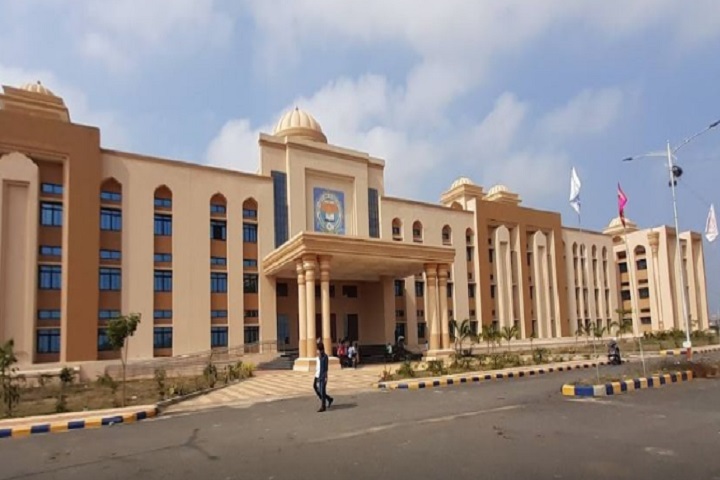
Andhra kesari university
Andhra Kesari University is not just one of the oldest educational institutions in the country, but is also the first to be conceived as a residential and teaching-cum-affiliating University, mainly devoted to post-graduate teaching and research. The people of the State have an emotional attachment to the institution, since it came into being after a prolonged and collective struggle of the Telugu elite for a University in the educationally backward northern Circars and Ceded districts of the erstwhile Madras Presidency. Former President of India Dr. Sarvepalli Radhakrishnan was one of its Vice-Chancellors who succeed Dr. C. R. Reddy in 1931. The University College of Arts was inaugurated on 1 st July, 1931. The inaugural courses were Telugu language and literature, History, Economics and Politics. A year later, the College of Science and Technology came into being with Honours courses in Physics and Chemistry. The University pioneered in introducing many new courses in Science, Arts, Management and Engineering in the country. The leaders of the university always believed that excellence in higher education is the best investment for the country and engaged the services of famous educationists such as Dr. T.R. Seshadri, Dr. S. Bhagavantham, Professor Hiren Mukherjee, Professor Humayan Kabir and Dr. V.K.R.V. Rao, to mention a few who set high standards for teaching and research. Nobel Lariat C V Raman was the proud alumnus of the University and closely associated in laying research foundations in Physics. Padmavibhushan Prof. C R Rao, the renowned statistician of the world, was also the proud alumnus of the University. Keeping in pace with the global needs and challenges under the leadership and guidance of successive Vice-chancellors, the University is offering several new Courses of relevance and Contemporary significance. Ever since its inception in 1926 Andhra Kesari University has an impeccable record of catering to the educational needs and solving the sociological problems of the region. The University is relentless in its efforts in maintaining standards in teaching and research, ensuring proper character building and development among the students, encouraging community developmental programmes, nurturing leadership in young men and women and imbibing a sense of responsibility to become good citizens, while striving for excellence in all fronts. As a sequel to this, the University has always subjected itself for continuous self-evaluation for maintaining standards and to reach set targets. Further, to assure quality in Higher Education the University has gone through the process of assessment and accreditation by National Assessment and Accreditation Council (NAAC) in April 2002. The Peer Committee has analyzed the strengths and weaknesses of the institution and has assessed the University with ‘A' grade awarding it with the best percentage among the State Universities of Andhra Pradesh.